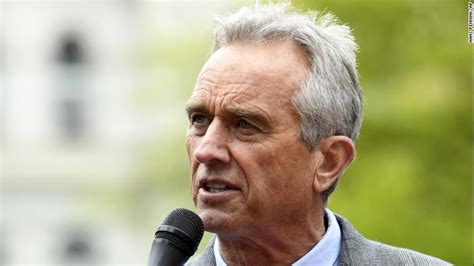
The United Nations has long engaged in grand declarations about health, sustainability, and equity. Lately, however, those declarations are taking on teeth — and the stakes for U.S. sovereignty and public health are rising. At the center of the tension: new UN political and regulatory proposals on global health, the upgraded International Health Regulations (IHR), and the bold pushback from HHS Secretary Robert F. Kennedy Jr.
In plain terms: the U.N. is trying to steer global health policy, and Kennedy is pushing back — saying that Americans will not hand over control to distant bureaucracies.
UN Health Declarations and the Ambition Behind Them
What are these “health declarations”? In practice, they are agreements or statements adopted (or attempted to be adopted) at high-level UN or WHO meetings that map out global priorities, targets, and governance frameworks for health issues — from chronic diseases to pandemic response.
For example:
-
In September 2025, the UN convened a High-Level Meeting on Noncommunicable Diseases (NCDs) and Mental Health. Leaders negotiated a “Political Declaration” to guide concerted action through 2030 on preventing, managing, and rehabilitating disease burdens such as cardiovascular disease, diabetes, cancer, respiratory illness, and mental disorders. World Health Organization+1
-
The declaration was designed to broaden the health agenda, including environmental determinants (air pollution, chemical exposures), digital harms (misinformation, social media effects), and regulation of novel risk factors (ultra-processed foods, novel tobacco products, marketing to children). World Health Organization+1
-
The UN text set ambitious numeric goals: for instance, 150 million fewer tobacco users, 150 million more people with controlled hypertension, and 150 million more people with access to mental health care by 2030. World Health Organization
In parallel, there has been movement to amend the International Health Regulations (IHR) with sweeping new powers. Under the proposed 2024 IHR amendments, the WHO would gain greater influence over cross-border measures during health emergencies — theoretically issuing recommendations (or requirements, depending upon interpretation) on travel, lockdowns, and reporting. HHS.gov+1
In sum, these UN health declarations and regulatory schemes aim for two things:
-
A unified, global health policy architecture that constrains national autonomy, especially in emergencies.
-
A shift of power toward technocratic rule setting, mandatory reporting, and standardized regulation across nations.
What They Intend to Do — And Why That’s Alarming
The intentions are sold as benevolent: better coordination, faster responses, equal access to medicines and prevention, integrating noncommunicable disease burdens into global public health, and closing gaps among rich and poor countries. These are tempting appeals. But what we see in practice is far riskier.
1. Sovereignty erosion via binding mandates
If the WHO (or UN organs) can dictate or press nations to conform (e.g. in lockdowns, movement restrictions, mandatory health measures), that undermines national decisionmaking. Declaring “public health emergencies” or “global risk” can trigger enforcement mechanisms that override domestic laws. The new IHR amendments are precisely the locus of that risk.
2. Slippery slope to global health governance
Once addenda for communicable disease interventions are accepted, further declarations (e.g., about nutrition, environment, mental health, digital health) become harder to reject. The UN’s health agenda is broad and growing; the machinery built for emergencies can be repurposed for social engineering.
3. One-size-fits-all policy traps
Global declarations naturally push for standardized global policies — e.g. taxing “unhealthy foods,” regulating digital media, restricting marketing, setting nutrition standards. But health conditions vary greatly: what helps one country might impoverish another or undermine local health priorities. The declarations tend to flatten differences.
4. Accountability and enforcement gaps
Even when UN declarations commit to “monitoring, reporting, review,” there is weak accountability. The actors enforcing compliance are themselves unelected or distant. Nations that push back risk political pressure, peer review, naming and shaming, or conditional funding constraints.
5. Risk inflation in emergencies
Proposals that expand the WHO’s powers in emergencies risk overreach. The ability to trigger cross-national mandates in unclear circumstances invites misuse. A vague “potential public health risk” clause gives wide discretion. That’s a governance design flaw.
Kennedy’s Reaction — Loud, Defiant, and Politically Charged
Enter HHS Secretary Robert F. Kennedy Jr., who has made rejecting parts of these UN health ambitions central to his posture.
-
On September 25, 2025, Kennedy announced the U.S. would reject the UN’s political declaration on noncommunicable diseases. He argued the document “exceeds the UN’s proper role while ignoring the most pressing health issues,” and that it carried elements such as “taxes to oppressive management” and “gender ideology” that the U.S. could not accept. Health Policy Watch+4Reuters+4KFF Health News+4
-
Because of the U.S. objection, the consensus adoption failed, and the draft must now face a state-by-state vote in the General Assembly. Health Policy Watch+2World Health Organization+2
-
On July 18, 2025, Kennedy (with the Secretary of State) released a joint statement rejecting the 2024 IHR amendments. They contended the amendments would grant WHO power over global lockdowns, travel restrictions, centralized medical databases, and “narrative management” — threats to American liberty if accepted. HHS.gov
-
Experts and fact-checkers have pushed back: for instance, the claim that the revised IHR would allow WHO to order lockdowns is countered by technical reading of the regulations, which specify it can issue recommendations but does not automatically convert them into binding mandates over sovereign nations. FactCheck.org+1
Kennedy frames his resistance as a defense of constitutional governance and sovereignty: health cooperation is welcome, but not at the expense of American self-rule. The U.S. posture is clear: we’ll cooperate globally, but refuse to cede authority or accept vague mandates that could override domestic decisionmaking.
Tensions, Tradeoffs, and the Real Stakes
Kennedy’s pushback is politically calculated and ideologically rooted, but it also reveals deeper tradeoffs in global health governance. The U.S. stands at a crossroads:
-
Either accept more binding global frameworks and risk eroding national control over health policy, or
-
Maintain maximal sovereignty, with less global coordination but greater room for independent direction.
This isn’t a binary choice in practice — some cooperation, data sharing, and joint regulation are needed in pandemics and cross-border health threats. But the question is: who writes the rules, who enforces them, and how much room is left for national discretion?
Kennedy’s criticism of ultra-processed foods, interest in food labeling, and calls for WHO reform reflect his ambition to stay inside health debates — but on America’s terms. The MAHA (“Make America Healthy Again”) agenda, his reorganization of HHS, and his rhetoric in rejecting UN drafts underpin a broader strategy: impose American preferment in health, not global dictate.
What We Must Watch
-
UN vote on the NCD declaration: since the U.S. killed consensus, the document now requires formal approval — states may negotiate further changes or pressure the U.S. to relent.
-
IHR legal interpretation debates: how courts and health lawyers read the updated regulations will determine whether Kennedy’s fears are real or overblown.
-
Subsequent UN declarations: climate, environmental health, digital health, and nutrition will likely be packaged next. The tension over sovereignty will repeat.
-
Implementation pressure: global funding, conditional grants, and peer pressure can coerce nations that nominally resist into standardized compliance.
-
Domestic legal and political pushback: state governments, Congress, agencies, courts — all may push back if they see overreach filtered through UN rules.
Final Word: Sovereignty Is Health, Too
The UN’s health declarations aren’t harmless politicking. They are strategic tools for global rulemaking. Unless America asserts the right to self-govern in health, we risk ceding authority over our medical, public health, and regulatory agenda to opaque technocrats.
Kennedy’s defiance is bold and controversial — and he may oversell risks or misinterpret technical text. But he’s right about one thing: health cooperation should never mean health surrender. The United States should lead globally, but on its own constitutional terms. That requires vigilance, legal rigor, and the willingness to say “no” when necessary.
If we don’t defend American control of our health destiny now, we’ll wake up a few years down the road surprised — and maybe governed by declarations we thought were symbolic but turned into enforcement tools.